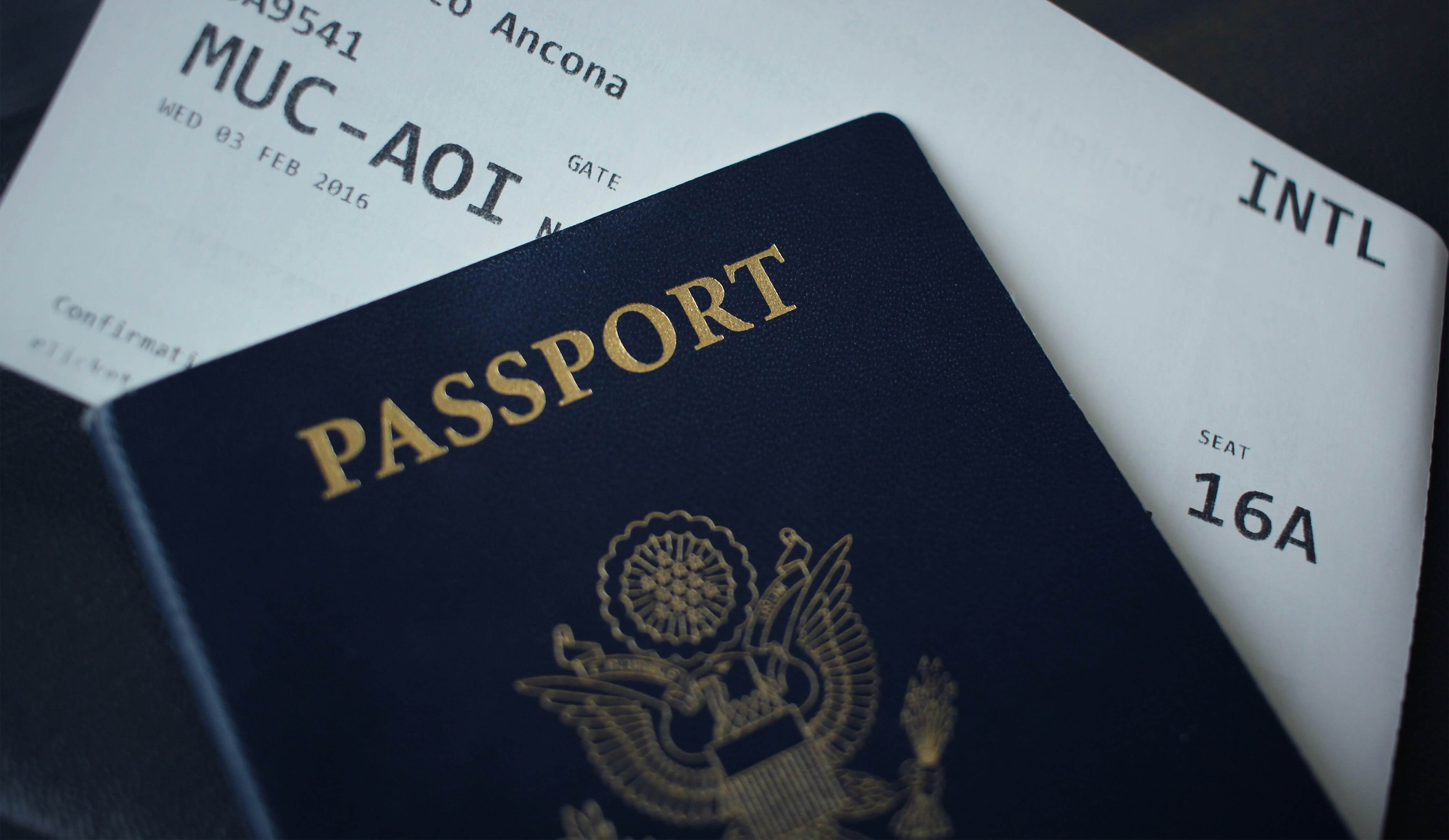
The US Passport Just Hit Its Lowest Ranking Ever
For the first time in 20 years, the US passport has fallen out of the top 10. Learn why smart Americans are getting a Plan B and what this means for your global strategy.
The US Passport Just Hit Its Lowest Ranking Ever
Why Smart Americans Are Getting a Plan B
For decades, the US passport was the gold standard of global mobility. American travelers moved through the world with an ease that citizens of other nations could only dream about. That era is officially over.
For the first time in the 20-year history of the Henley Passport Index, the United States has fallen out of the top 10 most powerful passports. Once holding the number one spot in 2014, the American passport now sits at 12th place, tied with Malaysia, offering visa-free access to just 180 destinations out of 227 worldwide.
Meanwhile, Singapore leads the pack with access to 193 destinations, followed by South Korea at 190 and Japan at 189. The shift isn't subtle, and it's not temporary. This is a fundamental reordering of global mobility power.
The Reciprocity Problem
Here's where it gets interesting, and where most Americans don't realize they're getting played.
While US passport holders can access 180 destinations visa-free, the United States itself allows only 46 nationalities to enter without a visa. That puts America in 77th place globally for openness. Let that sink in: the US ranks 77th in how welcoming it is to other nations while expecting the world to roll out the red carpet for American travelers.
This massive gap between the access Americans enjoy and the access America provides is one of the widest disparities globally. And here's the kicker: every country with a similarly large gap between their travel freedom and their openness has either stagnated or declined in passport power over the past decade.
Turns out, the world notices when you expect special treatment while offering nothing in return.
Consequences in Real Time
The consequences are playing out now:
- Brazil revoked visa-free access for Americans in April due to lack of reciprocity
- China, which has been rapidly expanding visa-free access to dozens of countries, deliberately left the US off the list
- Somalia's new eVisa system and Vietnam's latest visa-free additions excluded Americans
These aren't random bureaucratic decisions. They're calculated responses to American insularity and the expectation that US passport holders deserve special status without offering the same courtesy to others.
Policy Driving Decline
The decline isn't happening in a vacuum. It's the direct result of increasingly restrictive US immigration policies that signal to the world that America is closing its doors.
Recent Policy Changes
- Visa issuance suspended for travelers from 12 nations across Africa, the Middle East, and Southeast Asia
- Heavy restrictions apply to seven more countries
- Threats of bans on up to 36 additional nations, most of them in Africa
- Seven African nations now face a visa bond requirement of $5,000 to $15,000, refundable only upon departure
- Blanket $250 "visa integrity fee" planned for most non-immigrant visa applications
- ESTA cost nearly doubled from $21 to $40 in September 2025
Think about what that signals: the assumption that travelers from these countries are flight risks who need to post bail just to visit.
The message to the world is clear: America doesn't want you here. And increasingly, the world is responding in kind by making it harder for Americans to go there.
While America Retreats, China Advances
The contrast with China's approach couldn't be more stark.
Over the past decade, China has climbed from 94th place to 64th on the passport power rankings, adding 37 visa-free destinations. More impressively, China granted visa-free access to 30 additional countries in just the past year alone, now offering entry to 76 nations compared to America's 46.
China's recent agreements with Russia, the Gulf states, South American nations, and several European countries aren't random acts of generosity. They're strategic positioning moves that cement China's role as a global mobility powerhouse while America voluntarily withdraws from the stage.
The geopolitical implications are obvious: openness and cooperation are winning strategies in the global mobility game, while insularity and exceptionalism are losing propositions.
The Wealthy American Exodus
Here's what should really concern policymakers: the declining power of the US passport is driving an unprecedented surge in Americans seeking alternative citizenship options.
The Numbers
- Applications from US nationals for investment migration programs skyrocketed 67% through Q3 2025 compared to all of 2024
- 2024 itself saw a 60% year-over-year increase
- Americans now represent the single largest group seeking second citizenships and alternative residencies
- More than Turkish, Indian, Chinese, and British applicants combined
These aren't random middle-class families worried about vacation convenience. These are high-net-worth individuals, entrepreneurs, and investors who understand what's happening and are taking action to protect their options.
They're implementing what professionals call "geopolitical arbitrage": acquiring additional residences and citizenships to hedge against jurisdictional risk and maintain the global mobility that a US passport alone no longer provides.
The trend is clear: multiple citizenship isn't just becoming normalized among wealthy Americans, it's becoming essential. The US passport remains valuable, but it's no longer sufficient as a standalone option for serious international professionals and investors.
What This Means for Your Global Strategy
If you're an American entrepreneur, investor, or digital professional operating internationally, the decline in US passport power isn't just a travel inconvenience. It's a signal about broader geopolitical trends that will continue affecting your business operations, investment opportunities, and personal freedom.
The smart money isn't waiting to see how much further the US passport falls. They're establishing tax-efficient second residencies now, in jurisdictions that offer both enhanced global mobility and legitimate tax optimization.
Strategic Residency Planning
This is where strategic residency planning becomes critical. Programs like Paraguay's territorial tax system combined with its path to a second passport offer exactly what internationally mobile Americans need:
- Enhanced travel freedom - Visa-free access to countries becoming harder for Americans to enter
- Tax efficiency - Zero taxation on foreign income
- Protection - Against continued US passport decline
- Fast-track citizenship - Obtainable after just three years of residency
- Minimal presence requirements - Just one day every three years after permanent residency
Paraguay citizenship provides visa-free access to numerous countries that are becoming harder for Americans to enter. Combined with zero taxation on foreign income, it's not just about passport power, it's about maintaining your competitive edge while the geopolitical landscape shifts beneath your feet.
The entrepreneurs and investors who are rushing to secure alternative residencies and citizenships aren't overreacting. They're reading the clear signals about America's trajectory and taking rational steps to protect their global mobility.
The Reality Check
The US passport isn't suddenly worthless. It still provides access to 180 destinations and remains one of the stronger passports globally. But the trend line is undeniable, and the gap between what Americans expect and what the passport delivers is widening.
Who This Affects Most
For most Americans who take one international trip per year to established tourist destinations, this decline won't materially impact their lives.
But for entrepreneurs building international businesses, investors with global portfolios, or professionals serving clients across multiple continents, this trend is concerning.
Relying solely on US citizenship for your global mobility and tax strategy is increasingly risky. The world is moving toward a multipolar order where no single passport provides comprehensive access and protection.
The Americans who thrive in this environment will be those who adapt by securing strategic second residencies and citizenships before it's too late.
The Path Forward
The decline of US passport power is both a warning and an opportunity. It's a warning about America's shifting position in the global order, and an opportunity for forward-thinking Americans to position themselves strategically for the multipolar world that's emerging.
Smart Americans aren't abandoning their US citizenship - they're augmenting it with strategic second residencies that provide:
1. Tax optimization on foreign income 2. Enhanced global mobility through additional passports 3. Geopolitical diversification against single-country risk 4. Business advantages in international markets 5. Generational wealth protection through territorial tax systems
The question isn't whether to establish a second residency, it's where and when. And for many Americans, the answer increasingly points to jurisdictions like Paraguay that offer the trifecta of tax efficiency, minimal presence requirements, and a clear path to second citizenship.
Ready to protect your global mobility and optimize your international tax position? Contact our team for personalized guidance on establishing strategic second residencies that work with your US citizenship, not against it.
Disclaimer: This article provides general information for educational purposes only. It is not legal, tax, or immigration advice. Laws and regulations change frequently. Always consult with qualified professionals before making decisions regarding citizenship, residency, or international tax matters.